Tuesday, January 11, 2011

Professionalism


The tragedy in Arizona has attracted a lot of news, especially in a media-centric world we have today. I find especially interesting the case of the local sheriff who has become newsworthy because of his public statements about possible influence of political rhetoric on the assailant. In an interview just hours after the shooting he implicated conservative pundits and politicians for inciting hateful rhetoric.


It seems normal that people will make assumption and judgments based on their world view and it would seem Sheriff Dupnik was doing this as a human reaction to seeing friends seriously injured or killed by a senseless act. What is interesting, however, is how the sheriff has responded since that first day. Given the chance to walk back his comments, he actually made them ore strident--calling the state bigoted (related to the hot topic of immigration).


In fact, on Monday--two days after the incident and after information clearly showed that politics and ideology likely had no influence on the killer--he upped the rhetoric leaving a local newspaper to write, "Enough attacks, sheriff. Enough vitriol. It is well past time for the sheriff of Pima County to get a grip on his emotions and remember his duty."


So is this an ethical lapse by the sheriff? Probably, but it sticks out for us because of how most people in that position will largely hide their personal feelings so well. I suspect as a younger man, sheriff Dupnik would have been better at handling the separation of professional duty and personal conviction, but as a veteran well into his seventies he may be signaling he is tired of holding on to that professional "facade" anymore.


It is actually amazing how so many professionals are able to keep their composure and take on a perspective that belies personal affinity or preferences. Every day we go to work we have to sometimes suspend the personal--that is what defines a professional. Sheriff Dupnik is probably a decent sheriff but appears to no longer seek to honor professional decorum. Ability to act according the needs of the job over personal feeling is what defines a professional, not just that they make money for doing it. It will not be surprising the sheriff will be retiring in the near future.

Monday, January 3, 2011

Big Projects


What is the most impressive feat: publishing two great books over approximately 15-20 years or several very good (and bestselling) books over about the same period? Of course the distinction between great and very good is in the eyes of the beholder but it is still an interesting questions to m e as I finish reading the new book by Laura Hillenbrand, Unbroken, which is the story of Louis Zamperini.


The book is tremendous as Hillenbrand is one of the best storytellers of non-fiction I have read (don't take my word for it, here is a take from NPR). Yet, this accomplished writer has published just two books--the first one was Seabiscuit in 2001. She spent seven plus years writing the next book and reading the acknowledgements it is a wonder she could write this book at all. In addition to conducting over 75 interviews with the principal, Zamperini, she involved dozens of people in the project in order to get the story and authenticate it. The main part of the story takes place during WWII and over multiple continents. She had to learn about things like B-24 navigation and the technology of bomb dropping along with gaining a more nuanced understanding of Japanese culture.


The effort seems so enormous and much more than simply being able to write well. Research is a huge part -- in fact I wonder if she is not a researcher who happens to write very well. Even more impressive is how she is able to engage others in the project. Important things cannot be done alone and she gains the help of many, many people who probably got paid nothing for their help except to be part of something they believed important and worthwhile.


I am impressed with accomplishment by Hillenbrand of seeing a large project through to such a successful end. I have also been impressed by the output of prolific writers like Tom Clancy and James Michener who would put out a novel (historical fiction) every 18-24 months. While their work also took research to make the fiction authentic, Hillenbrand did not have the license they had and still wove a great tale. I vote for plodders over the profligate.

Tuesday, November 9, 2010

Electioneering Strategy

Looking at post-election commentenary I like to read about how surprising results happened. Usually it is not by luck alone (but always some of that, too). The race for Congress in NY-25 House district caught my interest as the challenger, Ann Marie Buerkle, appears to have narrowly won her race against a well-liked incumbent (the race is still too close to call). Certainly, part of her fortune was to run in a heavily-tilted GOP year as a republican. But according to this Syracuse article, the anti-democratic wave was not sufficient for her to win, but a network of novice campaigners provided the groundwork to get her over the top.


What is also very interesting is all the volunteer work that goes into campaigns (we already know about all the money). And the question begs: Is volunteer work by novice constituents more effective than campaign work done by paid professionals? Consider this NY-25 constituent that is featured in the article as helping spear-hear the volunteer network of support: "I listened to her talk and I was totally captivated with her," Maslona said of Buerkle. "It really motivated me to want to work for her."


And here is her assessment of her difference-making volunteer brigade: "It was just a lot of hard work," she said. "I don't know how else to describe it. The volunteers just kept me going. I couldn't have paid these volunteers to do this kind of work with so much passion and enthusiasm." In a campaign year when Meg Whitman lost the California governor's race by 10 points after spending $150 million, it is nice to hear that passion often trumps money when human capital is what is really needed.

Tuesday, November 2, 2010

Future Value

Today is election day and the political "experts" have made their predictions for the outcome. Which brings up the interesting dilemma of predicting the future -- in business and politics and sports people like to predict the future. The popularity of punditry is undeniable.

First, for today's election is pretty straightforward because of the science of polling. Predicting republicans will pick up seats in the U.S. Congress is simple because of the many polls taken over the last several months. Interestingly, however, when the polls show something that is unprecedented such as the what some say about the size of the possible changeover, then the pundits can create alternative interpretations as they try to fit the new facts to historical records.

Punditry and fascination for the future has few limits. Consider the Internet site intrade where you can bet on future events of all stripes. For example, do you know the odds that Sarah Palin will get the republican presidential nomination in 2012? Well at this moment those odds are nearly 17% according to those willing to bet their money via intrade. I am not sure, but I doubt Barack Obama was even rated for the nomination in 2006, two years before he got elected president (and those that took high odds on Hilary Clinton lost their bet). The future is fascinating, but impossible to predict.

Many tomorrow will get their predictions about this election mostly right (intrade has the probability of a republican takeover in the House at 96%, so don't be too impressed by anyone predicting such an outcome) but anyone who cared to predict this election 18 months ago or earlier . . . well they might as well go the racetrack (or predict who will win the world series in 2011) where educated guesses probably are going to still lose you money.

Tuesday, October 26, 2010

Corporate Athletes


A lot is made of both professional athlete salaries and executive salaries, particularly how ridiculously high they are. In the case of executives salaries of CEOs have come under scrutiny for the obscene payouts for those whose companies either tread water or fail. I am in Vancouver attending a conference and a performance expert from Human Performance Institute who trains what they call executive athletes made an interesting comparison between professional athletes and corporate executives:


Workday: Athlete 4-5 hours; Executive 8-12 hours

Career span: Athlete 5-7 years; Executive 40-50 years

Train/Perform ratio: Athlete 90%/10%; Exec 10%/90%

Accountability: Athlete Game or Race Day; Exec ALL the TIME

Off Season: Athlete Several months; Exec 3-4 weeks


Maybe both earn their pay. Or to put another way -- why would a normal person want either job? Professional Athletes put demands on their bodies that impair their bodies later and executives (at least high profile ones) don't seem to have much of a life outside of their job. Of course lots of people want either of those jobs for the simple reason that how can you ever get the highs associated with competing and winning that you get as professional athletes and executive athletes. And if they reach the top, they get paid VERY, VERY well.

Sunday, October 3, 2010

Like Business

You can read a lot of political news these days with an election a month away. Today, I read about the prospects for the two main political organizations -- democrats and republicans. In this article from an Arizona website, I was intrigued by this quote: "In some ways, Democrats were bound to face this kind of pressure. The party's recent run of good political fortune is hard to sustain."

In fact, political parties are just like companies who "market" their services to consumers (voters). In politics, the parties seek some kind of sustainable edge -- often the concept used is political realignment where some kind of enduring coalition is built. In business it is called "sustainable competitive advantage." But the notion of sustainable advantage is becoming more fleeting all around as the quote above indicates. Perhaps, it is because consumers have so much better access to knowledge. In any case, political analysts may want to be careful asserting such a thing as political alignment just as business leaders should not assume they ever will reach that holy grail of sustained competitive advantage.

Sunday, September 26, 2010

Rockhurst Centennial

I got to take in some of the festivities on Friday night for the Centennial celebration. First, the Helzberg School had an open house and honored Marian Nigro, who was the administrator for our Executive Fellows program for many years. Dozens of Fellows alumni have fond memories of Marian and she certainly left her stamp on the program. Memorabilia -- mostly collected and saved by her -- were laid out for the open house. The most memorable were the caricatures drawn for each class -- each alum would find their drawing in the class picture that was displayed. God bless Marian who passed away earlier this year.

Also walked the grounds with my youngest children and then took in the volleyball match. The volleyball was great entertainment and Rockhurst won 3 straight games for the match. As we walked to our car we took in a snippet of the soccer game taking place right in the middle of all the hub-bub of the evening -- a great venue. The team managed a tie and Coach Tocco was honored at a reception right afterwards.

Here is the interesting thing: Coach Tocco was back at school at 7:45 a.m. the next morning, to teach his Accounting class. This after a long game that went overtime and reception that went right up to midnight. And even though he probably wanted more sleep, he would say he loved to do both things. Besides having student-athletes at a smaller school like Rockhurst, we have coach-academics who do well in both areas. Not bad at all.

Sunday, September 5, 2010

Issues of the Day

Although I have a point of view on most things, I am sometimes surprised by how someone else sees an issue or news that paints an issue in a new light. Here is what I read today that fit into these categories.

First, news that is completely surprising -- the Wall Street Journal reports on the school in Los Angeles that cost nearly $600 million to build -- much more than it cost to build the Staples arena not far from this school. I have tended to have the view that good money follows bad in financing of public schools, yet, I had no idea of the extravagance heaped on the Robert F. Kennedy Community Schools complex. And, for the most part, the people approved this expenditure through bond issues. The amenities at this school ready to open in a few days include vaulted ceilings and "florid murals of Robert F. Kennedy." A person overseeing this venture noted that there was no price for having good taste. The one thing that was not shocking to me was a track record for a similar glitzy, high-dollar venue in L.A. (Roybal Learning Center) -- it badly underperformed compared to the overcrowded and non-descript school it was meant to supplement.

Second, George Will's Washington Post op-ed, shares the thinking of Walter Russell Mead regarding the climate change issue. According to Mead the apparent slowdown of the climate change zeitgeist is somewhat predictable because its movement fifty years ago was one of skeptics of government and conventional thinking. The environmentalists took on such "scientific" movements like urban renewal and nation building. They were close cousins of economic Libertarians who also had a disdain for government solutions. Now the environmental movement is Big Brother, driven by a government and scientific consensus that has little toleration for skeptics. In any case, Mead's point of view is interesting and one I had not thought of before.

These things might give one pause -- especially those working and studying at college -- for not thinking there is another side. Of course, when these arguments tend to support your point of view you are more likely to read them.

Sunday, August 22, 2010

Benedictine Monks

Just spent a most enjoyable day-and-a-half up at Conception Abbey with our Executive MBA class. Among other great things that happened during the stay, Father Curran addressed the class and gave an interesting contrast to the Benedictines that run the Abbey and the Jesuits who were formed about 1000 years later.


The monks are very much a community -- it is embedded in who they are. For them retirement is the grave as they are committed to staying true to the rigorous routines of the Abbey schedule (at least 4 prayer times, all done together and 6 a.m. vigils -- every day). The motto for the monks is prayer and work and they do plenty of both. All of them have a vocation that contributes to the operation of the monastery, which boasts a beautiful Basilica, circa 1891. For these folks plans involve centuries. The delightful Abbot Gregory, for example, has been at Conception for nearly 40 years. The genesis of the Benedictine order is 1500 years ago.


Jesuits, on the other hand, use the motto "Contemplation in Action," which fits them quite well and their mission of education. Reflection is a core value, starting with the spiritual exercises developed by Ignatius. The Jesuits spend much of prayer alone rather than in group. Importantly, they look to serve where the world is; nearly all of their 28 U.S. universities operate in urban areas. As Father Curran noted, however, despite this contrast [the strategy person in me sees the interesting positions these two order present that clearly differentiate them] they are linked because it was the Benedictines who took in an injured Ignatius for convalescence. And it was here that he developed the Spiritual Exercises and later the Jesuit order. Thus, Father Curran was able to make the connection of these somewhat related orders while clearly showing how they are distinct.

Sunday, August 8, 2010

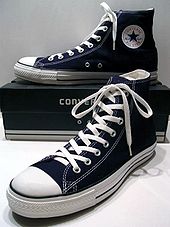
Converse All Stars

Back in the early to mid-1970s when I played high school basketball, the canvass high top sneaker was a popular shoe for serious ball players. But soon after that the canvass shoes were replaced by the much better built (support and traction) and designed (leather) next generation shoes -- by the mid 80s Nike had established the Air Jordan's, which fetched a healthy sum of money.


Anyway, the Converse All-Star canvass I figured had gone the way of the dinosaur, though I admit seeing them worn by young people who definitely were not ball players. A few weeks ago as I took my 13-year old daughter shoe shopping we were discussing options she and her friends look for in shoes and the Converse high tops came up -- THIS was now fully immersed in shoe fashion for teenage girls and boys (not to mention other demographics including toddlers). My daughter did not buy the shoes, but on a flight to San Francisco last month I sat next to a young girl wearing -- red Converse high tops. Of course, my impression is probably predictable: "How the heck does this shoe have any demand!"


You have to love American capitalism (or I should say global capitalism). A shoe brand started in 1917 with the original Converse All-Stars, rejuvenated mid-century by the celebrity of Chuck Taylor, and apparently completely washed up by the mid 70s with advent of leather sneakers is repackaged and marketed for a new purpose -- design footwear ("ugly" design footwear). And apparently fetching about $45 a pair -- for 2-ply canvass and rubber. Interestingly, a few years ago the company (now owned by Nike) changed the design to 1-ply canvass creating a different texture and look. Not surprisingly, customers rebelled. They weren't buying the shoes for their quality -- it was the look! Much like Coca Cola coming out with new coke because they thought it was about taste that people drank Coke.


With my new awareness, I will be taking a look on the Rockhurst campus this year looking for my old High School "sweat-heart" on the feet of 21st Century coeds that won't be looking for any kind of performance from them except their quirky retro style (the style was popularized apparently by punk bands and then more regular celebrities). Another example that markets are created not discovered.

Sunday, August 1, 2010

Chevrolet Volt


I am reading about Chevrolet's new eco-friendly car the Volt. A couple of days ago it was officially panned by the New York Times as a first-class LEMON. The car costs a whopping $41K with all the features and convenience of a $15K economy car. This after millions of dollars invested through grants, not to mention the millions spent by the company to develop. Most predict that it will not be a more than a niche--even the company came up with that assessment even though the $1.5 Billion (yes, that is BILLION) is be lavished on consumers as an incentive for them to buy these . A couple of years we could laugh at such business folly, but of course as taxpayers we have majority ownership of GM.


It would be easy to jump to the conclusion that the Volt is the idea of a government bent on pushing an environmental agenda, but the Volt was conceived well before GM became Government Motors. No, the Volt was a strategic decision made by the management that got GM bankrupt in the first place. Bad management can happen without government intervention.


What interests me is what will happen if there truly is no market for this seeming misfit of a car. The problem with government ownership is that even a cash strapped government can foist lots of resources to an endeavor (think NASA in the 60s and any war effort). Two problems with that in the case of GM's Volt. First, having access to money too easily will not likely incent market innovation, something that is sorely needed in the battery or hybrid car markets (same with alternative energy: the cost of the alternative is just too high to be competitive). Companies that are lean and not flush with resources can often outmaneuver those behemoths where resources come too easily. Second, if the government can create incentives that impact the demand side of the business--i.e., offer rebates for making the purchase, it creates a conflict of interest with competing products. That is, the government is part of both sides of the transaction (seller and buyer) and will certainly create the appearance of being unfair if not actually being that way.


I do know that at $41K, the Volt is priced well beyond my means and I don't expect to see many in the Rockhurst parking lots.

Friday, April 23, 2010

April Madness

It's April, time for April-May madness . . . er, okay not the same as March Madness, which has become institutionalized with "brackets" and lots of televised games. I quit filling out brackets several years ago and have paid more attention to the pro game.

I do like to follow sports teams and apply it to principles of management. A few years Michael Lewis wrote "Moneyball," a great story about baseball and how small budget teams were able to create successful strategies. In basketball, I follow the Utah Jazz who have their own way of doing things that has proven successful for a small market franchise.

Kevin Arnovitz of ESPN writes today about their system and how management from the players, coaching staff, and general manager are all aligned to that system. It reminds me a bit of the Japanese who started learn production, famously at Toyota, as a way to make cars. They could not afford the high capital of assembly plants used in the U.S., so developed cooperative systems that over a long period of time created efficiencies that could not be matched by U.S. firms. Many have tried to copy the lean systems of Toyota, but often fail because their systems all the way across are not aligned with it.

The Jazz team, as reported by Arnovitz, keep their players longer than most teams because their system demands familiarity and repetition. Ten of the 13 players on their team are second round draft picks or undrafted. They look for players that can play their flex system. They are all in to their flex system -- they run all the time; a system that requires coordination and discipline not always found in the free flowing NBA game. This from Arnovitz is telling "Utah doesn't swap players in and out of their organization very often. The Jazz build around a core group of young players -- often second-round picks and castoffs -- and invest a great deal of training and expertise in those players. It's one thing to run these sets over and over again to achieve full command of the offense, but quite another to do it with the same core of personnel."

They have a plan and follow it and depend on the people (coaches and players) to implement at high level of commitment. By the way, the only thing not really aligned is the Utah Jazz label itself -- Jazz and Utah are exactly a match. The franchise, however, is imported from New Orleans and the owners have decided to keep the existing brand name rather than try to create value in a new one.

Wednesday, March 31, 2010

Teams

I have not watched a lot of college basketball this year (and I did not do any March Madness bracket), but did take in the two games this past weekend for K-State and Baylor. College students more and more get involved in team projects or are part of teams in other sports -- and sometimes rue having to try and manage the difficult team dynamics or uneven individual efforts. Yet, these games show how potent good teams are.

In both games where a spot in the final four was on the line, K-State and Baylor fell short because they played better teams. In both cases the Big 12 teams had equal if not superior talent but their play often turned too individualistic where one player tried to do it himself (it may have also been due to an offensive strategy that limited other options). The winning teams also had "stars" but they didn't try to take over on their own -- which means they didn't take as many bad shots.

Too bad for the Big 12 -- they had great opportunities to get into the final four. Hats off, however, to teamwork.

Friday, March 19, 2010

Student Paper -- Part IV

Here is the ending of the student memoir I have been posting this week (See prior posts for the first parts of this paper. Enjoy . . .

A few days ago I asked a fellow student what his major was. When he said Biochemistry, I asked, “Pre-med?”
“Pre-dent,” he said. “You?”
“I’m pre-med, but I’m not a science major.” I hesitated. “I’m actually majoring in English.”
I waited for the usual response: the startled look, the assurance that I must be insane. It’s the same reaction I get from English majors when I tell them I’m pre-med. But he just sort of shrugged, as if this were not such a big deal.
“I like to read and write,” he told me. “By the end of the week I’m tired of using the analytical side of my brain, so I write crazy poetry.”
As I walked away, I wondered what had happened to all the well-rounded people in America. It may be one of the greatest flaws in our education system. For some reason we grow up thinking that we need only appreciate one subject, understand one thing. The two poles are usually the humanities at one end and math and science at the other. Why the separation? They’re all just as much the same as they are different. Each discipline needs another. If everyone were to recognize this, I think they would find learning more enjoyable. It’s part of the rediscovery process. The less we appreciate, the more we lose.
I’m not sure how much of our second sight we can get back. I keep searching for it, only to find that most of the time, I’ve struck it unawares, glimpsing that other world for a priceless fragment of a second. But I’ve made progress. Sometimes, now, there are days I can look at the undulating peaks and valleys of the sine function and see in it the same spark of life I perceived, at age five, in a paperclip.

Wednesday, March 17, 2010

Student Memoir Part III

Students do a lot of writing in their college career. Here is part 3 of one student memoir you might find interesting (Parts 1 and 2 are in the preceding posts):

I can identify the turning point. It was when we were modeling data with linear functions. Lines were not so bad; I could remember rise over run, y-intercept, the equation y = mx + b. But then we moved on to the application portion, where you had to somehow relate it to real life. By this point I was pretty savvy at making graphs. Despite the complaints of my classmates, I had come to enjoy Mathematica, the computer algebra system we used. I could plot data points and enter functions with relative ease. I could tell the computer to do calculations for me. It wasn’t a bad setup, really.
The previous class we had collected measurements of the wrist and neck sizes of ourselves and several other classmates. We’d made a scatter plot of the measurements, neck size against wrist size, and the next step was creating a linear function to capture the trend. I remember feeling vaguely surprised that I had all the skills to do so; I didn’t struggle with the assignment. And I was not used to not struggling with math.
I came up with my function. On Mathematica it soared upward through the scatter plot, a line stretching to infinity at either end.
It didn’t strike me at first, the enormity of what I had just done. Mostly I was just glad to have it over with, one more math assignment to put behind me. But as I thought about it later, about that single, perfect line rising through disorder, I came to feel an unfamiliar sense of awe. To find a pattern in randomness like that had to count for something. It was almost poetic. I felt I had glimpsed beyond the veil to a new, vast world. It was the same world I had lost after those first few years of life, that second sight every child forfeits for the sake of growing up. In that one, solitary line I had regained a bit of this world. Perhaps in learning we acquire nothing new; we are merely rediscovering what we have forgotten.
I’m taking Calculus II this semester. While math will never be my best subject, I’ve fallen in love with the way it makes me look at the world. Math is our hope for surety, for clarity, for order. Two plus two is four. But it also pleases our need for the abstract, our desire to study something that transcends the human intellect. It’s gloriously mind-boggling to think about the Koch snowflake and how it can have an infinite perimeter but a finite area. I like the idea of asymptotes, too, where a curve can keep reaching for a limit but never actually get there. Isn’t this a metaphor for life, happiness, love? All this time writers have painstakingly described that age-old thing in the distance, the thing that’s never quite tangible, when all they needed was a single word. For me, asymptote sums up everything we strive for. I think I’ve been waiting for that word most of my life . . .


The conclusion comes on Friday.

Monday, March 15, 2010

Memoir Part II

In the last post I started a student memoir from a Rockhurst English class taught by Dr. Martin. Here is part two of the memoir (see March 11th post for beginning). Enjoy.

. . . My first impulse was to get the dreaded class out of the way. I knew I would hate it to the end, and the only chance I saw for getting a good grade was selling my soul to the devil. Such a Faustian outlook managed to convince the more rational part of myself that math was too torturous for my first semester, and so that fall of my freshman year was delightfully math-free. College had a strange effect on me. I found I relished the stress, the difficulty—the blur of papers and exams and procrastinated assignments. Having been homeschooled throughout grade school and high school, I had never really felt the pressure to achieve good grades. To do well, certainly, but not for a grade. As the weeks dragged by and I immersed myself in history, psychology, composition, and philosophy, my aspirations began a series of quantum leaps. When I was much younger, before I’d realized what I figured then to be the unfortunate union of math and science, I had wanted to be a doctor. Perhaps my sudden proximity to others who were actually pursuing this ambition reawakened this dormant notion. All at once it seemed possible. Even so, the two semesters of math required by most medical schools made me anxious.
“I want to be pre-med,” I confided to one of my professors. “But I’m afraid it’ll be too hard.”
He regarded me sympathetically, as if he’d glimpsed in my words the awful fear of failure that had so often paralyzed me in the past. “. . . the only thing I would be worried about is it being too easy.”
The words emboldened me. I was registered for Precalculus the next semester, and I decided I would get an A in that class. In the meantime I began a sort of mental conditioning program. Math couldn’t be as bad as I remembered. It was all perspective. I had learned to hate it, had learned to fear it, and if I could somehow teach myself to look at each equation and graph with a smile and an open mind, I could be good at math.
The early weeks of that first college math course passed in a blur. It was not bad, but not exactly good, either—I think I saw it as a distasteful, but bearable, undertaking. Then something changed. . .

Thursday, March 11, 2010

A student memoir

College should be a place for students to explore and reflect on ideas that they might not otherwise. I am always impressed by the neat things our students can do (and the way our faculty can get them to do it). Had a chance to read a student memoir -- assigned by Dr. Dan Martin. It seems like a very simple exercise and not a long paper, but professor Martin gets much more than you might expect.

For example, here is how the memoir I got to read (printed here with permission) starts:

When I was five I could breathe life into a paperclip. I could make it sentient; I believed it spoke to me. In a variety of ordinary objects I glimpsed a potential playmate. Children have the ability to gaze at the framework of everyday life and see through to the world beyond—great and frightening and spectacular. As teenagers we lose this ability, and by the time we are adults we have forgotten it. Some of us search for it and regain bits and pieces, but the innocence and immediate acceptance of the extraordinary is never recovered. Our second sight is, at best, intentional.
The oddest things trigger rediscovery of this bygone experience. In my case, it was college mathematics.
For as long as I can remember, from my earliest experiences with the standard operations—addition, subtraction, multiplication, and division—I’ve hated math. First the numbers held no beauty for me, no principles of organization. They confused me. I never could remember multiplication tables, and I never really cared to until I needed to call them to mind for a timed test. Then, in algebra, I developed an instant terror at the sight of x and y. What was this odd language before me, these sentences of numerals and variables? Half the symbols were frustrating, punctuation marks like plus and minus that tended to get lost in translation, while others were near blasphemous. I hated seeing things I loved, parentheses and periods-turned-decimal-points, in the midst of what I abhorred and feared. It occurred to me as I grew older that the problem was mine, not that of the discipline. So many others could read these expressions in the same way I read a sentence, glorying in the nuances of each detail. I grew to believe that this was a world only some people could inhabit. I would content myself to drown in words and leave the numbers to those who embraced them.
Throughout high school, I didn’t want to go to college. I had decided that once I graduated I would become a novelist, and for years I fostered the delusion that by the time I was seventeen I would be a published writer. In many ways I think this fantasy helped me. For those years I wrote, and wrote, and wrote. I became a better writer because, in my mind, I had already decided I would succeed. Upon waking up from this dream in my last year of high school, when all my friends started applying to various colleges, I began to form more concrete plans. Higher education is a cultural expectation these days. And with the vast, unknown territory of university education sprawled before me, I had to come to grips with one of my greatest fears: taking one, final mathematics class . . .


To be continued in my next post.

Monday, March 1, 2010

USA Hockey 30 Years Later

I wrote about the 1980 miracle on ice last week. The U.S. team almost got gold again and they did in a somewhat familiar way -- chose a team rather a group of all-stars. In other words they did not fill the roster with the best individual players, but put a team together that could get more out of the whole than the sum of the parts. Read here from ESPN.com . . . it worked as they greatly outperformed expectations and came within a goal of taking the gold.

Often we hate working in teams, but here is an example of how they can work spectacularly when done right.

Monday, February 22, 2010

Miracle

The greatest miracles of my life are the birth of my four children -- and I saw all of those first hand. But the next greatest one happened 30 years ago today and is called the Miracle on Ice. I'm not a big hockey fan, but that Olympic event where a U.S. team of very young amateurs beat the best team in the world still ranks as the greatest sports event in my lifetime. Read this article from Joe Posnanski on interesting facts from this event (like most everyone saw it on tape delay broadcast). While I have seen the movie about this event (several times) and read about it in some detail, I never saw the whole game itself as I was a college student at the time and involved in some social activity that night (or more likely I was studying).


This anniversary is especially interesting as I compare it to what is currently happening to Toyota and their recall problems and what has been happening for some time at Microsoft. You see these two iconic companies who have amassed fat cash accounts as a result of their dominance in the car and computer markets are what the Soviet hockey team was in 1980. That team had been nearly unbeatable from the mid-1960s to the 1980s -- even Microsoft would have envied the "monopoly" the Soviets enjoyed in the sport (and by 1980 they had proven they could easily beat any NHL all-star team).


But how the mighty fall. Even with $24 billion in cash reserves Toyota is facing a crisis in confidence in their cars that could knock them down a notch. Microsoft has been trying for a decade to figure out what to do next; mostly they have been losing good talent to companies like Google who have a steep growth curve (always these are the companies that are most fun to work at) and a growing stock price. Complacency is the enemy of those that stand at the top and they are very susceptible to fall.


As brillant as the U.S. team strategy was and as talented the young players were, they had no business beating the Soviets. But every Goliath is ripe to be slain by a David in part because that giant loses focus, gets complacent, starts believing its own press, and stops innovating and staying hungry go get better. As perfect as the U.S. team was that Olympic period, it was the Soviets who were ripe to be beat.


But I still want to watch the real game all the way through.

Friday, February 5, 2010

Boulevard Beer


Last week the owner of our local Boulevard Brewery spoke to our executive class. Interesting story -- typical of entreprenurs and we have many in K.C. Timely also, as they Boulevard has been in the news for their expansion into St. Louis, right into the belly of the beast beer empires (or former beer empires). Over 20 years McDonald has built the company to be one of the largest micro breweries in the nation (8th I believe is what he said), employing dozens of local people. What caught my interest was Boulevard's foray into glass recycling and the start of their business Ripple Glass.


Although Boulevard prefers to sell draft beer, they sell a lot of bottled beer; McDonald was concerned about the byproduct of sales -- empty glass. He did his research, finding out that glass was better when recycled separte from other trash -- when combined inefficiencies cause only a fraction of the glass to be able to be recycled as opposed to being dumped in the landfill. McDonld's concern and interest is genuine, enough to invest his time and money in the Ripple Glass venture.


But here is what is interesting -- he sees the venture (which needs to scale up significantly to create any profit) as helping him sell more beer. And this is a great lesson for corporate social responsiblity. Business people like McDonald can give back in important social ways by trying to make their business better. Though McDonald is not a Rockhurst alum, but he fits well with the Jesuit tradition of service to others and solid business ethics.